
Knowing me, knowing you, ahaa
'If you can't be a poet, be the poem' — David Carradine

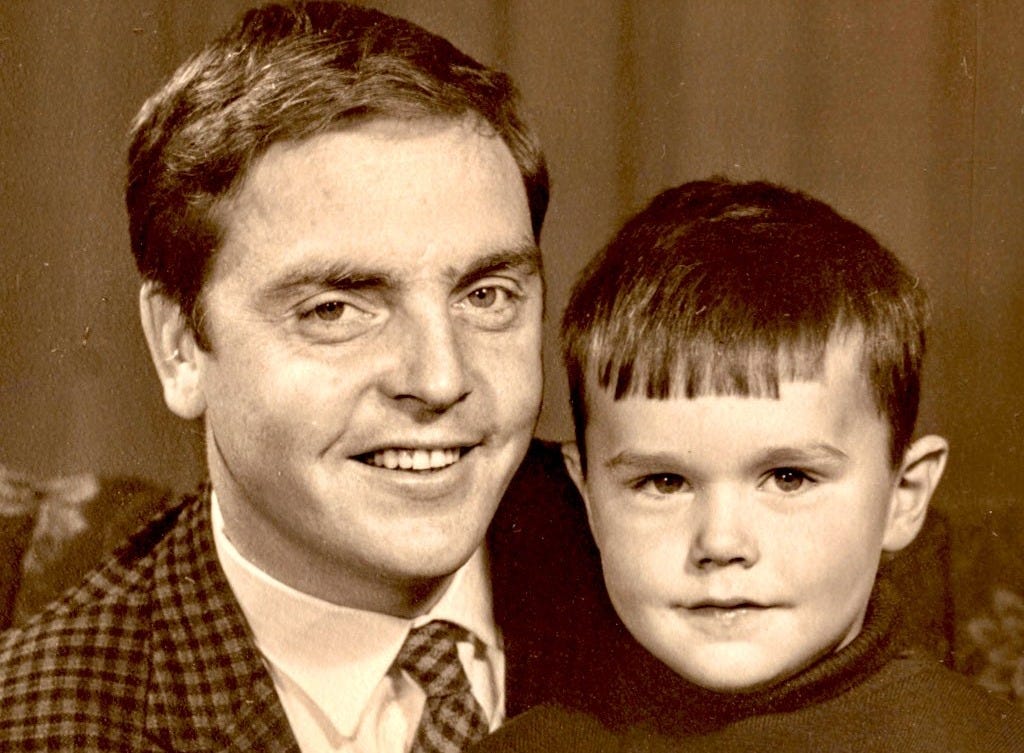
For the first time in my life, I have attempted to write a poem. I drew inspiration from one of the main competition themes set for the 2026 National Eisteddfod of Wales: the theme is Adnabod (‘Knowing’). The festival takes place this year near the town of Cardigan, not far from my father’s birthplace. The poem is above all a personal tribute to my late father, Hywel Teifi Edwards, the pre-eminent Eisteddfod historian and an authority on the cultural condition of Victorian Wales. The poem is written in Welsh—the sole language of Eisteddfod competition—in a mix of traditional verse form and vers libre. It is not written in strict-metre cynghanedd: that would, in all honesty, be beyond my ability. I have done my best to render the poem in English: it lacks the punch and flow of the original, but it still conveys a message. I hope readers find it illuminating. One of the most distressing episodes in 2024 was seeing the nature of my relationship with my father wilfully misrepresented by the media, and by Welsh-speaking journalists in particular. My translation is inserted below the original.
EISTEDDFOD GENEDLAETHOL CYMRU 2026
CYSTADLEUAETH Y GORON
Ffugenw: ‘Gelyn’

‘ADNABOD’

Mab anfad
yn artaith ei uffern
yn troedio hen goblau ar drywydd y gwir;
gwrando yn astud
am lais ei gydnabod —
ond marwol a distaw yw cefnfor a thir.


Ai camdyb dwl fu ceisio nabod neb
heb lwyr amgyffred craidd ei fod ei hun?
Ai teg fu’r awch i fesur geudeb neb
heb addef dichell wael ei oes ei hun?
Y mae i gariad ei greulondeb drud,
y digio dilafar rhwng mab a thad;
cysgod gwên a chysgod gwg — gwynepryd
annirnad ei wedd, cyfrwys ei lygad.
Pa les ymddial am y mân ffraeo?
Pa les dal dig am friw difwriad ddoe?
Pa hawl ymddial am y gwrthgilio?
Pa hawl dal dig am dy ddisyfyd hoe?
Darperaist gysur yn dy ffordd dy hun,
a threchaist dy gythreuliaid anghytûn.


Cyfaredd Arth, dyfnwraidd hiraeth —
pentref gwyn heb berfedd mwy;
talgylch prifiant, tir mabolaeth,
encil iach yn bwdr glwy.

Parth y môr a’r bryniau tonnog,
noddfa gain rhag hylltra byd;
gorsedd wledig gwerin dduriog,
aelwyd balch y goddef mud.

Sawraist fêl dilwgr febyd,
adnabuost Gymru driw;
profaist hanfod pur y cynfyd,
anian bro, â’i hiaith yn fyw.

Gwydnu traed ar draeth cerigos,
bracso brwd tan bompren drom;
ymddifyrru hyd ddechreunos
ar dy draethell arw, lom.

Swyngyfaredd gwlad y Cantref,
hafan clych a lleithder lli;
goeth dafodiaith glir ei hadlef —
pwy â’i hesgeulusodd hi?

Teml hynafol y Cristion —
Henfynyw, ceidwad y bae;
cyrchfan Arth, Teifi ac Aeron —
tir Dewi, nodded ddiau.

O lannau’r môr i berfedd tir —
o Lanon i Lywernog —
fe ddamniaist werthiant dolydd ir
gan wencwn gwancus, taeog.

Methaist ddirnad maint y distryw,
methaist goelio’r sigo chwil;
methaist oddef gwladfa ledryw,
methaist faddau brad yr hil.

Gymru ddiffaith, Gymru bendrist,
rhegaist filwaith faw dy ffawd;
ar gael cam yr arbenigaist —
llyncaist boer, enynnaist wawd.

Athrist, diderfyn Seisnigo —
athrist diwreiddio parhaus;
athrist yr ysu am blesio —
athrist y parch at y Sais.


Mab diamddiffyn
yn nwyster ei ddolur
yn twrio mewn gorffwyll am arwydd o wir;
ymbil mewn dagrau
am wth o gyfeiriad —
ond marwol a distaw yw cefnfor a thir.


Heniaith yn fratiaith, cywirdeb ar drai,
cawn arddel ‘Fort of Crows’ er lles y Sais
ac ail-ddifwyno Dinas Brân, heb fai
ar neb am wrthod gweld y bythol drais.
Troes gymynrodd yn ffrwcs aflesol, hyll —
tunnell o ddom ar dywod Trecastell,
carthion afiach y ‘Cable Bay’ erchyll —
yr oesol wawd yn clwyfo fel fflangell;
nid anodd ynganu ein Bochlwyd ni,
nid cwlwm tafod mo hen goed Llugwy,
nid dyfroedd Rhys mo Tivy na Towy,
nid gwlatgar goddef yr estron a’i fympwy.
Heb asgwrn cefn — nid hawdd ymsythu;
heb galon — nid posib atgyfannu.


Mab gwrthodedig
ac anorffenedig
yn llechu mewn cuddfan yn wyneb y gwir;
begian yn dawel
am arwydd o dostur —
ond marwol a distaw yw cefnfor a thir.


Bro’r hirgron
bro’r dur a’r tun
bro fenthyg dy oes di;
dyn dŵad yn nabod wrth reddf
bobol y chwarae saff;
bro'r sosban
nad oes dim berwi arni
a thrist ledferw'r dorf
yn digolledu’r loes;
bro glaear y bleidlais ofer
bro fyddar bost
falch ei stybyrndra
lac ei gafael ar orau doe;
gwreca mewn cachfa
meddet ti yn aml
yw porthi penwegi;
swcro iaith ddiaelwyd
iaith y bwtwn opsiwn
iaith rhaglenni nas gwylir
iaith llyfrau nas darllennir
iaith cyfle a chyflog —
manna’r anghyflogadwy;
hercian cibddall
o breseb i burdan
yw bywyd dy fro di.


Arfer cynhenid yr ymddifwyno —
hen Gymry penfas yn plygu dau lin;
gwatwar canrifoedd yn slei hwyluso
ein syndrom ymwadol, distadl, blin;
cenedl wantan y tindroi bythol,
cenedl ofnus y camau petrus,
cenedl fawr ei chwynion parlysol,
cenedl barod ei diflas esgus;
pader clwc torfeydd y meysydd chwarae,
unig allfa’r Cymry di-fraint, porcyn;
ernes wag gwleidyddion dinod y Bae
i chwyldroi cenedl brin ei swlltyn.
Pe sgubid stabl Awgeas yn lân
dwysáu eto fyth a wnâi’r gyflafan.


Trigfan Arth
mangre teulu
ceidwaid tyddyn
morwyr
seiri;
gwasaidd lafur,
prin fodoli.

Gwron tawel
ein llinach ni
y John Daniel doeth
y saer coed
y morwr
y carcharor
y cymwynaswr da.

Mamgu Picton
gwidw wydn
lodes ddewr
llyncu balchder
mewn dygn dlodi
a derbyn shistans
yn ei thrallod.

Anti Lis
pentrefwraig steilus
coluro cyn capel
wfftio culni
dwli ar ganu
sigarét cysurlon
ar gynn tragwyddol.

Anna fach
yn straffaglu
i glebran Sisneg mowr
heb strach
hôl dillad o’r ‘cantaloupe’
a gwneud galwadau
o ffôn y ‘koski’.

Dai a Meri
uchelwyr y ‘Tower’
paned a phice
a hanes y Sowth
yn nhlodi Tairgwaith
a’u hireth
am ‘Gwaun Cachu Gwydde’.

‘Annie Ben Step’
â'i llyged aderyn
yn cewco
ar y cyffro beunyddiol
a throelo hen drothwy
‘Laura Ysha’
ar gopa’r bont.

Y barfog
Gapten Meical
pen llongwr
penteulu
pen bostmon
traddodwr newydd
llon ac ingol.

Esther Ellen
truanes frou
yr esgor diened
a threngi mewn seilam;
Dan, y gŵr,
lwff annifyr
a chollwr natur.

Jones y Sgwlyn
y cachwr drwg
pwno merched
yn grac babwr
am geisio câl dysg;
cered i uffern
oedd gweddi’r plant.


Mab cyhuddiedig
a thra melltigedig
yn cripad mewn duwch er cyffwrdd â’r gwir;
deisyf yn ddidwyll
am gysur maddeuant —
ond marwol a distaw yw cefnfor a thir.


Pe’th aned dithau yn y Gymru hon
a fentret herio dictad llym yr oes?
Pe’th wylltid gan ragrith yr hen diwn gron
a feiddiet danio grym polemeg groes?
Dwyfoli difeddwl y filiwn ffug —
y gwamal ymgreinio i ffansi wag;
siantio gwirebau damcanwyr minffug
am wlad ‘gynhwysol’ ddiberfedd, orwag;
cenedl ddibwynt ei hadrodd a’i chân,
cenedl wantan, gynffongar ei thaith;
cenedl wasaidd heb angerdd na thân,
‘cenedl noddfa’ heb loches i’w hiaith.
Pe lwyddem nabod gwir ein cyflwr du
fe barchem eto dy dreiddgarwch di.


Treuliaist oriau yn dy angau
yn dy bentref gwynfydedig;
troediaist dywod gyda’r glanaf,
brigaist donnau cysegredig.

Yn dy freuddwyd gwelaist glydfan
bur, ddiledryw, fyw ei phrifiaith;
yn dy farwgwsg saernïaist
dreflan loywbur, lân, ddigraith.

Buost dad a thad-cu rhadlon,
buost wenfflam dy ragfarnau;
buost ŵr a chymar graslon,
buost wlatgar bendifaddau.

Yn dy ddirboen buost wrol,
yn dy ing ni leisiaist gri;
yn dy dranc agoraist galon —
nabyddais di, nabyddaist fi.


Crwt edifeiriol
a hunanddinistriol
yn deisyf achubiaeth y gwir;
crefu am gryfder
ei gawr o gydnabod —
ond marwol a distaw yw cefnfor a thir.


NATIONAL EISTEDDFOD OF WALES 2026
THE CROWN COMPETITION
Pseudonym: 'Gelyn' ('Enemy')

ADNABOD
('KNOWING')

Accursed son
tortured in his own hell
treading old cobbles in search of truth;
straining intently
for the voice of his kindred —
but ocean and land are dead and silent.


Was it foolish presumption to try to know anyone
without fully knowing the core of one’s own being?
Was it fair to judge the emptiness of others
without admitting one’s own wretched deceit?
Love exerts its cruel price,
the silent ire between father and son;
the hint of a smile, the shadow of a frown — a countenance
inscrutable, with cunning eyes.
What use revenge for petty quarrels?
What use the grudge for yesterday’s slight wound?
What right to vengeance for withdrawal?
What right to resent your sudden exit?
You gave comfort in your own way,
defeating your cut-throat demons.


Idyllic vale of Arth, deep well of longing —
the blessed village robbed of its heart;
circle of childhood, land of boyhood,
a healthy haven, now sick and rotten.

Realm of sea and rolling hills,
a fine refuge from worldly pain;
rustic citadel of sturdy peasantry,
proud hearth of silent suffering.

You savoured the purest honey of childhood,
you knew the true Wales;
you tasted the essence of authenticity,
the spirit of the land, its language alive.

Hardening soles on a pebbly shore,
tickling fish under the ancient bridge;
running free until last light
on your rough, bare shingle.

This magical land of Cantre’r Gwaelod,
a submerged kingdom of muffled bells;
its glorious dialect, echoing softly,
but who bears blame for its decay?

Henfynyw, ancient temple of the Christian —
guardian of the wide bay;
confluence of Teifi, Arth and Aeron —
the land of Dewi, our sure refuge.

From seashore to heartland —
from Llanon to Llywernog —
you damned the sale of fertile acres
by greedy, heedless farmers.

You failed to fathom the scale of destruction,
you failed to accept the steep decline;
you could not endure a ragbag nation,
you could not forgive the betrayal of your race.

Desolate Wales, hopeless Wales,
you cursed your fate a thousand times;
you wallow in your victimhood —
you always surrender, you deserve scorn.

Tragic, endless Anglicisation —
tragic, perennial uprooting;
tragic, ingrained yearning to please —
tragic, pitiful respect for the Saxon.


Defenceless son
in the throes of pain
staring in darkness for signs of truth;
pleading in tears
for wise direction —
but ocean and land are dead and silent.


Our ancient tongue besmirched, truth on the wane,
we adopt 'Fort of Crows' for the Englishman’s sake
and soil the glory of Dinas Brân without blaming
anyone for trivialising the eternal mockery.
The ancient covenant turned into a foul mess —
a ton of dung on the sands of Trecastell,
the filthy waste of ugly 'Cable Bay' —
the disdain of centuries stinging like a whip;
it’s no tangle to pronounce Bochlwyd,
nor does Llugwy make one tongue-tied,
nor would Rhys know the Tivy or Towy,
nor is it patriotic to pleasure the foreigner.
Without a backbone — it is not easy to stand up;
without a heart — it is not possible to come together.


Rejected son
diminished
lurking in fear of facing the truth;
begging quietly
for signs of mercy —
but ocean and land are dead and silent.


Land of the oval ball
land of steel and tin
your adopted land;
a stranger who knows by instinct
the people who play safe;
land of the saucepan
that never boils
where the crowd’s sad simmer
redeems the pain;
land of the unthinking vote
land of the stone deaf
proud of its mulish mind
blind to the best of yesterday;
fishing in a sewer
you would say
is to seek wisdom in empty minds
to promote a homeless language
the language of the option button
the language of unwatched programmes
the language of unread books
the language of opportunity and profit —
manna of the unemployable;
a blind shuffle
from cradle to purgatory
is the life of your land.


The ingrained custom of self-abasement —
old Welsh penitents bending both knees;
centuries of mockery slyly facilitating
our self-hating, dispirited syndrome;
a nation of weaklings, of eternal terror,
a nation of fearful, hesitant steps,
a nation paralyzed by complaining,
a nation primed with tedious excuses;
the clap-trap of grandstand crowds,
only outlet of the stunted Welsh;
vain promises by low-grade politicians
to transform a nation robbed of money.
If the stable of Augeas were swept clean
the crisis would deepen ever more.


Haven of Arth
family stronghold
farmhands, sailors, craftsmen;
servile labour
miserable acres,
meagre wages
bare survival.

Quiet hero of our lineage —
John Daniel
master carpenter
valiant sailor
brave prisoner
faithful benefactor to many.

Granny Picton
of sturdy stock
raised a family in grim poverty;
endured the shame
of parish assistance
overcame hardship
her triumph was ours.

Anty Lis
famously stylish
always in make-up for chapel;
scoffing at deacons
loving her hymns
with comforting cigarette at hand.

Little Anna
battling daily
to speak good English
without gaffes;
buying clothes
from the “cantaloupe”
and making phone calls
from the “koski”.

(Aunty Anna, striving for decorous English, rendered “catalogue” as “cantaloupe” and “kiosk” as “koski”.)

Dai and Mary
squires of the Tower
ready with tea and cakes;
a wealth of tales
about life in the South
and their fondness
for “Gwaun Cachu Gwydde”.

(Instead of “Gwaun-cae-gurwen” they would say “Gwaun Cachu Gwydde” — “Gwaun-goose-shit”.)

“Annie On The Step”
and her bird’s-eye view
of all the comings and goings;
wearing down the old threshold,
doing her job
as village detective.

Captain Michael
with full white beard —
seaman, head of household, postman;
in fair weather
he was welcomed,
but in a storm
he broke many hearts.

Esther Ellen
sad of heart
bore nine children
and died in a workhouse
at fifty;
Dan Pen-llyn, the husband
a dreadful rogue
a waster
a reckless drunkard
full of guile.

Jones The Teacher
beat the girls
for wanting to learn;
'Go to hell'
was the children's
daily prayer.


Blighted son
crippled by regret
reaching out to touch the truth;
waiting quietly
for the comfort of forgiveness —
but ocean and land are dead and silent.


If you were born in this Wales
would you dare challenge today’s diktat?
If you were enraged by the old hypocrisy
would you dare launch your polemic in response?
The mindless worship of 'a million speakers' —
the foolish clamour for empty goals;
chanting the platitudes of petty pundits
about an 'inclusive' country, barren and bleak;
a nation pointlessly reciting and singing,
a nation numbed on its hollow journey;
a servile nation without passion or fire,
a 'nation of sanctuary' without refuge for its language.
If we could truly know the bleakness of our state
we would revere your insight once more.


You spent your final hours
in your blissful village;
you trod the purest sand,
you swam in sacred waves.

In your dream you saw a haven,
its language vibrant, pure, authentic;
in your dying moments you created
a clean, unscarred township.

Kindly father and grandfather,
aflame with your prejudices;
gracious husband and companion,
aflame with your patriotism.

In your torment you were heroic,
in your anguish you voiced no cry;
in your death you opened your heart —
I knew you, you knew me.


Penitent son
self-destructive to the last
clutching for truth in the story;
crying out for strength
and embrace of love —
but ocean and land are dead and silent.