
Epic cant
'Hypocrisy is a fashionable vice' — Molière

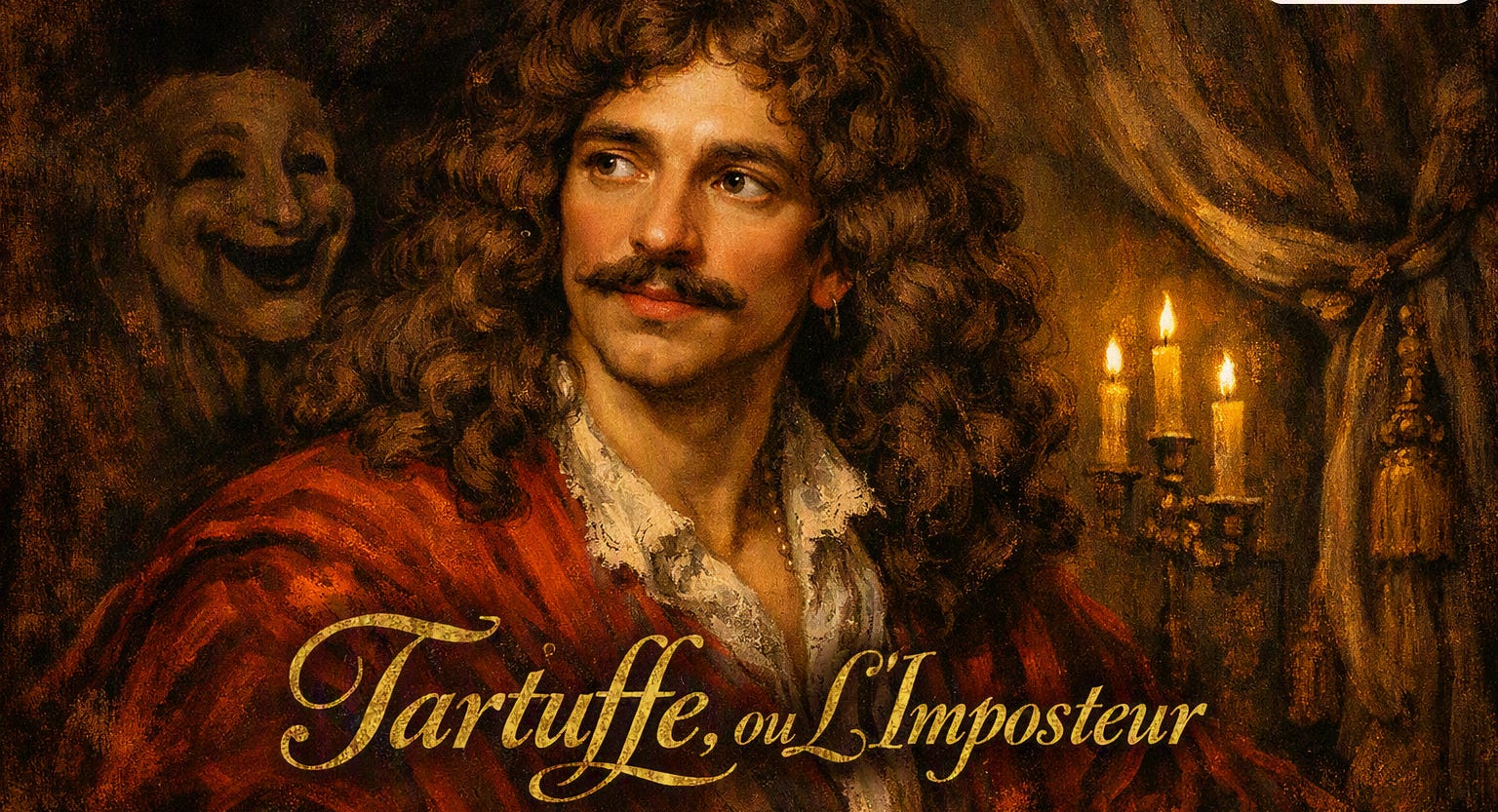
Few writers have pricked balloons of pomposity, humbug and cant as savagely as the French playwright Molière: ‘Hypocrisy is a fashionable vice, and all fashionable vices pass for virtues.’
I have no doubt that the author of Tartuffe (1664) — a timeless satire of hypocrisy and bogus piety — would have found even richer material had he attended the cultural love-in known as the National Eisteddfod of Wales, held last week in Pembrokeshire.
The prime target of Molière’s ire was religious hypocrisy, but Tartuffe is also a warning about the perils of allowing performative moral authority to triumph over reason. His message could not be more pointed: the brazen assumption by some individuals of peculiar moral authority is all about manipulation and flexing social power.
Religious hypocrisy is a Welsh speciality, even in these days of single-figure congregations. Wales is awash with hundreds of rotting chapel and church buildings, a situation facilitated by inept local authorities and tolerated by a passive public. But that’s a separate post.
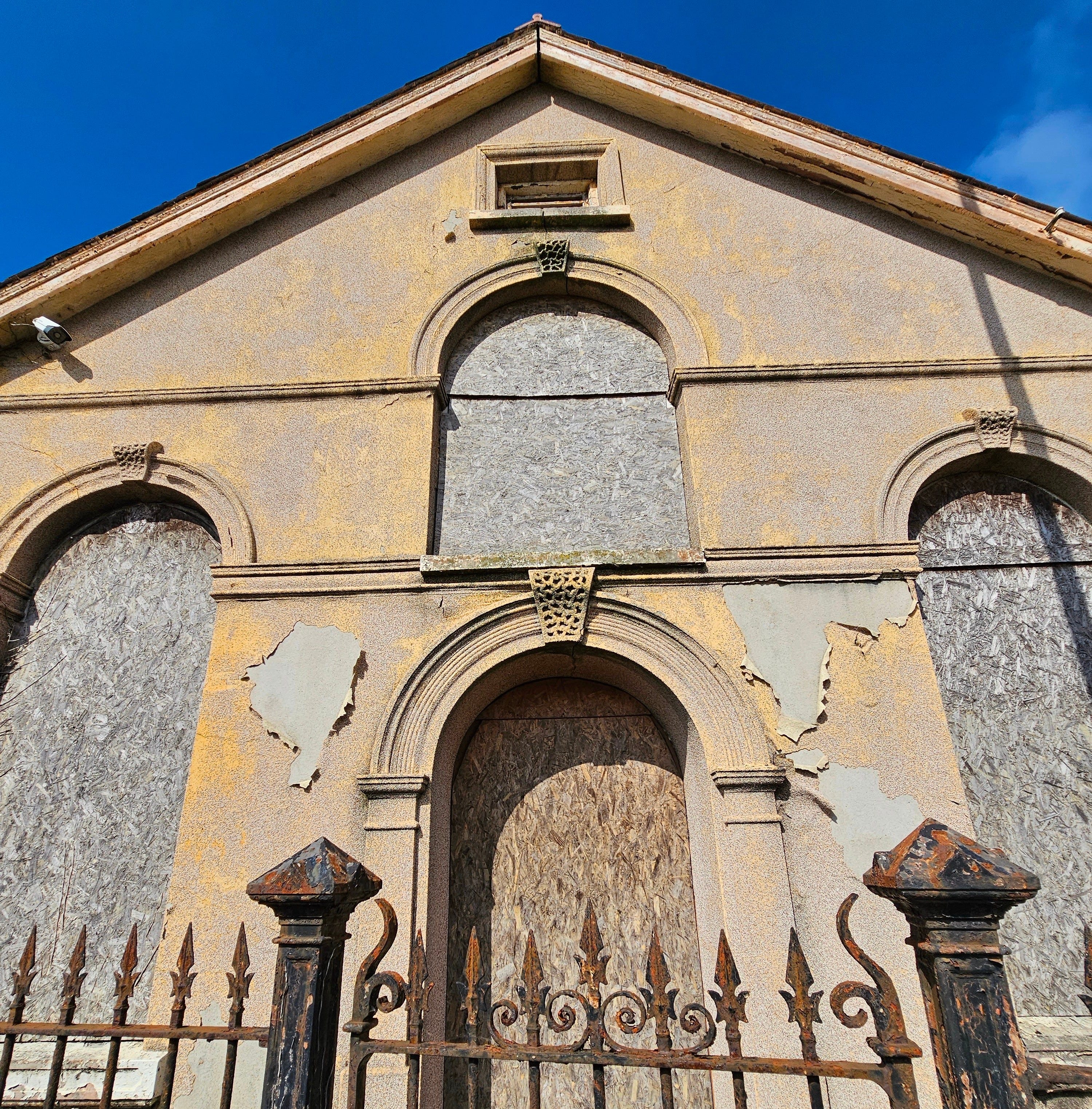
Despite the advanced decay, the Welsh Nonconformist mindset persists: gleefully judging others for their perceived or demonstrable failings is part of the creed. The brighter ones manage to conceal their joy when others fall, but they are heavily outnumbered by the ranks of the stunted — those who are simply not bright enough to self-edit.
Which brings me to the Eisteddfod, the Welsh media bubble, and the Welsh ‘commentariat’.
All three, this past week, have reminded me of the ghastly Madame Pernelle, an aggressive moralizer who detects sinfulness in everyone but herself. She, meanwhile, throws herself shamelessly at the fraudster Tartuffe.
The Eisteddfod — and the associated Gorsedd of Bards — are among the principal cultural institutions in Wales, alongside the National Library, the National Museum, the BBC, S4C, Welsh National Opera, and the various national sports bodies. Some years ago, this list would have included the University of Wales, a highly successful federal institution. But our national university was eviscerated by the greed and ambition of some of its constituent colleges. That’s yet another post in progress.
Public life in Wales is dominated by a ‘virtuous’ elite — a mob of job-swappers who regularly pop up in different roles. They were out in force last week in their natural habitats: lavish motorhomes with wardrobe-sized wine fridges; Gaddafi-scale tents with space aplenty for druidic cavorting; ‘hospitality’ areas for the more discerning. Meanwhile, the claustrophobic rows of bog-standard caravans are for the decidedly non-elite.
It should be clear, I hope, that when I chide the Eisteddfod bigwigs I am in no way criticising the volunteers, the local organisers, or indeed the many competitors whose hard work and accomplishments deserve our respect and thanks.
The week began with a perennial favourite of the Welsh-language news media — malice and gossip dressed up as serious news. The nightly television programme Newyddion (‘News’) is made by BBC Wales for S4C. Its viewing figures suggest very strongly that its quasi-tabloid provision appeals to a tiny fraction of its potential audience.
In the week ending 12 April 2026, for example, Newyddion’s highest-rated edition drew a godawful 15,000 viewers (source: S4C). Four of the week’s seven main editions — a majority — drew fewer than 10,000 viewers. And please spare me the guff about digital reach on Facebook, Instagram and TikTok. Watching clips in doomscroll mode is not the same as watching a programme. As Greg Dyke would say, cut the crap.
These are, by any objective measure, atrocious figures. I know — better than anyone — how challenging the broadcast environment can be for news programmes. But there is no excuse — given the traditional appetite for quality news provision among Welsh speakers — for a failure of this magnitude.

Joining the dots is not difficult. Viewers want authority and expertise. In Bethan Rhys Roberts, the main anchor, they have an exceptional broadcaster. When she is absent, the programme nosedives into a zone of posturing mediocrity and editorial disarray. This was glaringly obvious on Monday of last week — 3 August 2026.
Unable to shake off the tabloid virus, the Newyddion team — spearheaded, it seems, by an individual called Jacob Morris (described to me by one of his colleagues in terms too offensive to print here) — manufactured a scandal which took the limelight away, quite unforgivably, from the deserving winner of the Crown poetry competition.
The manufactured scandal was that I had written a poem. Worse, that I’d had the temerity to publish a poem. Much, much worse — that I’d apparently committed some kind of crime by submitting the poem for inclusion in the Crown category.
I have indeed committed a crime — the world knows all about it — but this was not it.
That it was a poem dedicated to my late father — someone who did more to promote popular appreciation of the Eisteddfod than any of the duds who’ve led the organisation in recent years — was clearly not important.
That is was a work expressing my personal remorse and regret — again — was equally unimportant.
That it was a poem written by someone whose life fell apart — as a direct consequence of serious mental illness — was simply inconvenient.
Of supreme convenience, however, was the opportunity I had gifted Newyddion, the Eisteddfod authorities and myriad others to expand their usual cosplay repertoire by ascending piously to the moral high ground.
The not-so-sharp editorial team on Newyddion decided that my decision to submit a poem — which was dumped into the worst category by the adjudicators — should be given more prominence than the superb work by Martin Huws which deservedly won the first prize. The decision to prioritise that narrative was theirs alone. No such editorial aberration would have been tolerated on any programme I used to present. This was a straightforward desire to play the tabloid game — the only game they seem to know — and to incite as much hatred as possible in the process.
Not content with this latest spasm of vengeance, they then sought the predictably hostile views of a soap actress. And for good measure, they interviewed the President of the Eisteddfod Court on the merits of banning people with criminal records from competing.
It was, as we say in the trade, a full-on monstering.
The Newyddion team should thank me for this post. More people will read this — and learn of their existence — than will watch a typical edition of their programme.
The curious demand to impose a competition ban on those with criminal records is a hornet’s nest waiting to be swiped. How on earth would such a ban be administered, given the strict use of pseudonyms in the literature categories to guarantee the integrity of the adjudication process? Or would any checks be limited to winners? The implication arising from my case would seem to be that all competitors would need to be verified. There would have to be some kind of vetting system, maybe something akin to a DBS (Disclosure and Barring Service) check. Good luck with that.
Had such a check been made on all previous contestants — and all Gorsedd members, let it be stressed — who knows what the impact would have been? I can instantly think of three people who’d have faced the druids’ guillotine.
It is, of course, a loopy idea, as well as a hugely counterproductive one.
If only I could think of a laser-sharp legal mind to shed light on such a proposal.
Oh. Wait.
There’s that retired judge, the one who’s a football commentator and quiz show host. No, I’m not joking. What’s his name again?

His Honour Judge Niclas Iorwerth Parry. Or just Nic Parry these days. He still presides over a court — but now it’s the Eisteddfod Court. The gushing blurb on the official Eisteddfod website includes the great man praising himself:
‘When I retired, I had the pleasure of sitting and hearing people say nice things about me, with many saying I had a style that made people feel I was on their side.’
The former judge — not of the Supreme Court variety, admittedly — will no doubt have a formidable grasp of the relevant legal pitfalls. In his Newyddion interview with reporter Aled Scourfield, he appeared to suggest, with Rumpole-style bluster, that banning those with criminal records should not be a problem.
I wish him well with the onerous task of vetting thousands of competitors ahead of next year’s Eisteddfod in Powys.
Meanwhile, let me state unequivocally that I had every right to compete in the Crown competition. I had read the rules carefully. There was no formal impediment to my taking part. The former judge must surely be aware of that. If he is not, his legal mind might not be as laser-sharp as I had imagined.
It will come as no surprise, therefore, when I say that I have really struggled to respect the integrity of the Eisteddfod authorities in recent years.
They showed their true colours in 2024 at the start of the Eisteddfod in Pontypridd: of the many organisations with which I was associated, the Eisteddfod was the only one which appeared to take advantage of my legal difficulties in order to create ‘good’ headlines for itself.
Most of the other bodies — both public and private — made contact discreetly to ask me to step down from my various appointments. I did so immediately. There was no fuss, no showboating by the organisations involved, and there were no public statements. The Eisteddfod — more specifically the Gorsedd of Bards — gave me no such opportunity and rushed to make public its decision to expel me from its ranks. The first I knew of it was when the announcement was made.
(I should explain to the uninitiated that honorary membership of the Gorsedd is not unlike the various trinkets dispensed by the British honours system.)
The former Archdruid, Christine James, backed by Nic Parry’s predecessor, Ashok Ahir, hastened to pronounce judgement in a manner befitting a Puritan trial.
Christine, an assertive evangelical Christian, duly provided the solemn media soundbites despite her almost certain knowledge that I had been given no opportunity to defuse the issue beforehand. She had been one of my father’s junior colleagues at Swansea University: I admire her many achievements; she is a woman of integrity; but this was a jarring episode.
As for Ashok Ahir, it is difficult to know where to begin. We had ‘enjoyed’ a rather tricky relationship when he was, in my view, a distinctly unimpressive manager at BBC Wales. Formal letters of Gorsedd ‘cancellation’ were sent in Ashok’s name to my elderly mother’s home — while I was being treated in a secure psychiatric unit. Those letters, which added to my mother’s distress, were not seen by me until my discharge months later.
It is difficult to convey the full force of my contempt for the way in which the Eisteddfod played to the tabloid gallery. It proved again that past loyalty means nothing to people whose only concern is the latest headline. My father spent decades energetically promoting Welsh culture — the Eisteddfod benefited hugely from his dedication. But submitting a poetic tribute to him was deemed ‘disgusting’, ‘catastrophic’, and ‘obscene’ in the hysterical responses of so many self-appointed arbiters of good taste.
What is ‘obscene’ in my view is the arrant hypocrisy of those who rush to judge others while living evidently imperfect lives themselves. Their wolfish appetite for vengeance erases any inclination to listen and to try to understand, as I explained in my previous posts on remorse and judgment.
There are people among us in society — unnoticed, unrecognised — who have convictions for murder and rape and assault and battery and all kinds of horrific crimes. They live their lives unmolested by the media and the public.
You could be forgiven for thinking that my crime — committed while I was suffering a full-scale mental breakdown — was in the serial killer category.
It is sobering to realise that the Eisteddfod, the Welsh and English media, and commentators who should know better, are all colluding in this grotesque pretence. It is cant on an intergalactic scale.
Do I regret submitting the poem? Not for a second. I valued the experience of writing and I shall continue. More people have seen the poem than are ever likely to see the work of the winner, which is a sad reflection on the level of interest among Welsh people in the laudable achievements of their Eisteddfod champions.